


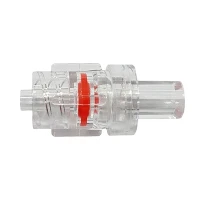


In the intricate landscape of pneumatic systems, each component plays a crucial role in ensuring the efficient and safe operation of the entire setup. Among these components, the stopcock stands out as a fundamental yet often under - appreciated device. As a dedicated stopcock supplier, I've witnessed firsthand the diverse applications and functions of stopcocks in pneumatic systems. In this blog, I will delve into the details of what a stopcock does and why it is an indispensable part of these systems.
Understanding the Basics of a Stopcock
A stopcock is a valve used to control the flow of fluid or gas in a system. In a pneumatic system, which relies on compressed air or gas to transmit power and perform various tasks, stopcocks serve as the traffic controllers of the gas flow. They are typically made of materials such as brass, stainless steel, or plastic, depending on the specific requirements of the application, including factors like pressure resistance, chemical compatibility, and cost - effectiveness.
The most common type of stopcock used in pneumatic systems is the 3 Way Stopcock. As the name suggests, a 3 - way stopcock has three ports, allowing for more complex flow control compared to a simple two - way valve. This design enables the stopcock to direct the flow of gas in multiple directions, shut off the flow completely, or even mix different gas streams if necessary.


Primary Functions of a Stopcock in a Pneumatic System
1. Flow Control
The most obvious function of a stopcock in a pneumatic system is to control the flow of compressed gas. By opening or closing the valve, operators can start or stop the gas supply to different parts of the system. For example, in a pneumatic actuator system, a stopcock can be used to activate or deactivate the actuator. When the stopcock is open, compressed gas flows into the actuator, causing it to move and perform its intended function, such as opening a valve or moving a mechanical arm. When the stopcock is closed, the gas flow is cut off, and the actuator stops moving.
Moreover, stopcocks can also be used to regulate the flow rate of the gas. Some stopcocks are designed with adjustable openings, allowing operators to fine - tune the amount of gas flowing through the valve. This is particularly useful in applications where precise control of the gas flow is required, such as in laboratory equipment or in the calibration of pneumatic sensors.
2. Directional Control
In addition to controlling the flow rate, stopcocks can also direct the flow of gas in different directions. This is especially important in complex pneumatic systems where multiple components need to be supplied with gas from a single source. A 3 - way stopcock, for instance, can be used to switch the gas flow between two different outlets or to connect two different gas sources to a single outlet.
For example, in a pneumatic circuit with multiple cylinders, a 3 - way stopcock can be used to alternate the supply of compressed gas between the cylinders, allowing them to operate in a coordinated manner. This type of directional control is essential for achieving the desired motion and functionality in many industrial and automation applications.
3. Isolation and Safety
Stopcocks also play a crucial role in isolating different parts of a pneumatic system. In case of maintenance, repair, or emergency situations, a stopcock can be used to shut off the gas supply to a specific component or section of the system. This helps to prevent the release of compressed gas, which can be dangerous and cause damage to equipment or injury to personnel.
For example, if a pneumatic valve needs to be replaced, the stopcock upstream of the valve can be closed to isolate the valve from the rest of the system. This ensures that there is no pressure in the valve when it is being removed, reducing the risk of accidents. Additionally, stopcocks can be used as safety devices in pneumatic systems. In some cases, they can be set to automatically close in response to abnormal pressure or flow conditions, protecting the system from over - pressurization or other potential hazards.
4. Pressure Regulation
Although stopcocks are not typically used as primary pressure regulators, they can have an impact on the pressure within a pneumatic system. By controlling the flow of gas, stopcocks can indirectly affect the pressure in different parts of the system. For example, if a stopcock is partially closed, it can create a restriction in the gas flow, which can lead to an increase in pressure upstream of the stopcock.
In some applications, this pressure - regulating effect can be used to fine - tune the performance of the system. For instance, in a pneumatic control system, a stopcock can be adjusted to maintain a certain pressure level in a specific chamber or actuator, ensuring that the system operates within the desired parameters.
Applications of Stopcocks in Different Industries
1. Industrial Automation
In the field of industrial automation, pneumatic systems are widely used for tasks such as material handling, assembly, and packaging. Stopcocks are essential components in these systems, as they allow for precise control of the pneumatic actuators and cylinders. For example, in an automated assembly line, stopcocks can be used to control the movement of robotic arms, ensuring that they pick and place components accurately.
2. Medical Equipment
Pneumatic systems are also commonly used in medical equipment, such as ventilators and anesthesia machines. Stopcocks in these applications are used to control the flow of gases, such as oxygen and air, to the patient. The 3 Way Stopcock is particularly useful in medical applications, as it allows for the mixing and delivery of different gases in the correct proportions.
3. Laboratory and Research
In laboratory settings, pneumatic systems are used for a variety of purposes, including sample handling, fluid transfer, and instrument calibration. Stopcocks are used to control the flow of gases and liquids in these systems, ensuring accurate and reproducible results. For example, in a gas chromatography system, a stopcock can be used to control the flow of carrier gas through the column.
Why Choose Our Stopcocks
As a stopcock supplier, we understand the importance of providing high - quality products that meet the diverse needs of our customers. Our stopcocks are designed and manufactured to the highest standards, ensuring reliable performance and long - term durability.
We offer a wide range of stopcocks, including 2 - way and 3 - way stopcocks, in different materials and sizes to suit various applications. Our products are rigorously tested for quality and performance, and we provide comprehensive technical support to our customers. Whether you are looking for a stopcock for a small laboratory experiment or a large - scale industrial application, we have the right solution for you.
Contact Us for Procurement
If you are in the market for stopcocks for your pneumatic system, we invite you to contact us for procurement discussions. Our team of experts is ready to assist you in selecting the right stopcock for your specific requirements. We can also provide you with detailed product information, pricing, and delivery options. Don't hesitate to reach out to us and take the first step towards enhancing the performance of your pneumatic system with our high - quality stopcocks.
References
- "Pneumatic Systems Handbook" by David Crolla
- "Industrial Pneumatics: Theory and Practice" by R. K. Bansal
- Various technical documents and research papers on pneumatic components and systems.