


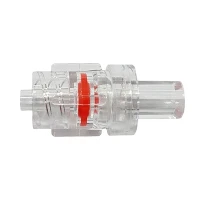


Reading the volume on a burette set accurately is a crucial skill in various medical and laboratory settings. As a supplier of high - quality Burette Sets, I understand the importance of this process and am here to guide you through it in detail.


Understanding the Burette Set
Before we delve into reading the volume, it's essential to have a basic understanding of what a burette set is. A burette set is a medical device used for controlled fluid administration. It typically consists of a chamber with volume markings, an inlet for connecting to a fluid source, and an outlet for delivering the fluid to the patient or the experiment. Our Burette Set is designed with precision and durability in mind, ensuring reliable performance in different scenarios.
Components of a Burette Set
The main components of a burette set include the burette chamber, which is the part where the fluid is stored and measured. It has graduated markings along its length to indicate the volume of the fluid. There are also clamps and valves that control the flow of the fluid. These components work together to allow for accurate and controlled fluid delivery.
Preparation for Reading the Volume
Before reading the volume on a burette set, there are a few preparatory steps to ensure accuracy. First, make sure the burette set is properly installed and connected to the fluid source. Check for any air bubbles in the chamber, as they can affect the volume reading. If you find air bubbles, gently tap the chamber to dislodge them and let them rise to the top.
Reading the Volume
The key to reading the volume on a burette set is to take a reading at the meniscus. The meniscus is the curved surface of the liquid in the burette chamber. To read the volume correctly, your eyes should be at the same level as the meniscus. This helps to avoid parallax errors, which can occur if you view the meniscus from an angle.
When the meniscus is concave (which is the case with most liquids), read the volume at the bottom of the meniscus. For example, if the bottom of the meniscus aligns with the 10 - mL mark on the burette chamber, then the volume of the fluid in the chamber is 10 mL.
It's important to note that burette sets usually have different levels of precision. Some may have markings every 1 mL, while others may have more precise markings, such as every 0.1 mL. Make sure you are aware of the precision of your specific burette set when taking the reading.
Factors Affecting Volume Reading
Several factors can affect the accuracy of the volume reading on a burette set. Temperature can cause the fluid to expand or contract, which may slightly change the volume. For most practical purposes, the effect of normal temperature variations is negligible. However, in highly precise experiments, temperature compensation may be required.
The viscosity of the fluid can also play a role. More viscous fluids may adhere to the walls of the burette chamber, leading to a small amount of fluid remaining on the walls and potentially affecting the reading. To minimize this effect, make sure the burette set is clean and that the fluid is flowing smoothly through the chamber.
Applications of Burette Sets
Burette sets are widely used in medical settings for intravenous (IV) fluid administration. They allow healthcare providers to control the rate and volume of fluid delivered to patients. In a laboratory setting, burette sets are used in titration experiments, where a known volume of one solution is added to another to determine the concentration of a particular substance.
Comparison with Other Devices
In the field of fluid administration, there are other devices available, such as Disposable Infusion Pump and Polycarbonate Syringe. While these devices have their own advantages, burette sets offer a simple and cost - effective solution for controlled fluid delivery. They are easy to use and do not require complex programming or electrical power, making them suitable for a wide range of settings.
Maintenance and Care
To ensure the accuracy of your burette set over time, proper maintenance and care are essential. After each use, clean the burette set according to the manufacturer's instructions. This usually involves flushing the chamber with a suitable cleaning solution and rinsing it thoroughly with water. Store the burette set in a clean and dry place to prevent damage.
Training and Education
Proper training is crucial for anyone who needs to read the volume on a burette set. Healthcare providers and laboratory technicians should receive comprehensive training on the correct use and reading of burette sets. This training should cover the preparatory steps, how to read the meniscus, and how to handle any potential issues that may arise during the process.
Conclusion
Reading the volume on a burette set is a fundamental skill that requires attention to detail and proper technique. By following the steps outlined in this blog, you can ensure accurate volume readings and reliable fluid delivery. At our company, we are committed to providing high - quality Burette Sets that meet the needs of our customers. Whether you are in a medical or laboratory setting, our products are designed to offer precision and durability.
If you are interested in purchasing our Burette Sets or have any questions about our products, we encourage you to contact us for a procurement discussion. We look forward to working with you to meet your fluid administration needs.
References
- Medical Device Handbook: Principles and Applications.
- Laboratory Techniques in Chemistry: A Practical Guide.