


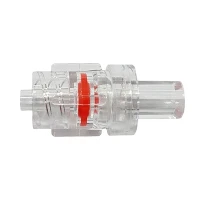


When it comes to the field of medical equipment, disposable infusion sets play a crucial role in the safe and efficient delivery of fluids and medications to patients. As a reliable Disposable Infusion Set supplier, I understand the importance of providing high - quality products with various options to meet the diverse needs of medical professionals. One of the key aspects of disposable infusion sets is the needle gauge, which significantly impacts the infusion process.
Understanding Needle Gauges
Needle gauge refers to the inner diameter of the needle used in the infusion set. The gauge number is inversely proportional to the needle's diameter. That is, a higher gauge number indicates a smaller needle diameter, and a lower gauge number means a larger needle diameter. For example, a 25 - gauge needle has a smaller inner diameter compared to a 20 - gauge needle.
The choice of needle gauge depends on several factors, including the type of fluid being infused, the patient's condition, and the intended infusion site. Different needle gauges are suitable for different applications, and medical staff need to make an informed decision based on these factors.
Common Needle Gauges in Disposable Infusion Sets
1. 14 - Gauge Needles
14 - gauge needles are relatively large in diameter. They are typically used in emergency situations where rapid fluid resuscitation is required. For instance, in cases of severe blood loss or shock, a large - bore needle like a 14 - gauge one allows for a high - flow rate of fluids, such as blood transfusions or large - volume saline solutions. However, due to their large size, they can cause more pain and tissue damage during insertion, so they are not commonly used for routine infusions.
2. 16 - Gauge Needles
Similar to 14 - gauge needles, 16 - gauge needles also have a relatively large inner diameter. They are often used in surgical settings for rapid fluid administration or in patients who require large - volume infusions over a short period. For example, during major surgeries where significant blood loss is anticipated, 16 - gauge needles can ensure a sufficient supply of fluids and medications to maintain the patient's hemodynamic stability.
3. 18 - Gauge Needles
18 - gauge needles are a popular choice in many clinical scenarios. They offer a good balance between flow rate and patient comfort. They are suitable for a wide range of fluids, including blood products, thick medications, and large - volume intravenous (IV) solutions. In addition, 18 - gauge needles are commonly used for central venous catheter insertions and for patients who need frequent blood draws along with IV infusions.
4. 20 - Gauge Needles
20 - gauge needles are widely used in general medical and surgical units. They are smaller than 18 - gauge needles, which means they cause less pain and tissue trauma during insertion. They are suitable for most routine IV infusions, such as antibiotics, electrolyte solutions, and maintenance fluids. Their relatively small size also makes them a good option for patients with small or fragile veins.
5. 22 - Gauge Needles
22 - gauge needles are even smaller in diameter. They are often used for pediatric patients or patients with very delicate veins. The smaller size reduces the risk of vein damage and makes the insertion process more comfortable for the patient. They are commonly used for slow - rate infusions of medications and fluids that do not require a high flow rate.
6. 24 - Gauge Needles
24 - gauge needles are the smallest commonly used needles in disposable infusion sets. They are mainly used for pediatric patients, neonates, and patients with extremely small or fragile veins. Due to their small diameter, the flow rate is relatively low, but they are well - tolerated by patients and minimize the risk of vein irritation and damage.
Factors Influencing the Choice of Needle Gauge
Fluid Viscosity
The viscosity of the fluid being infused is a critical factor in determining the appropriate needle gauge. Thick fluids, such as blood products or some medications, require a larger - gauge needle to ensure a smooth and efficient flow. For example, when infusing packed red blood cells, a 18 - gauge or larger needle is usually recommended to prevent clogging and ensure a proper flow rate. On the other hand, thin fluids like normal saline can be infused through smaller - gauge needles.
Infusion Rate
The desired infusion rate also affects the choice of needle gauge. If a rapid infusion is required, a larger - gauge needle is necessary to achieve a high flow rate. For instance, in cases of emergency fluid resuscitation, a 14 - or 16 - gauge needle may be used to quickly administer large volumes of fluids. In contrast, for slow - rate infusions, such as continuous medication drips, a smaller - gauge needle like a 22 - or 24 - gauge may be sufficient.
Patient's Vein Condition
The condition of the patient's veins is another important consideration. Patients with large, healthy veins can tolerate larger - gauge needles without significant discomfort or damage. However, patients with small, fragile, or sclerosed veins may require smaller - gauge needles to avoid vein rupture or thrombosis. In addition, the location of the vein also matters. For example, veins in the hand or forearm may be more delicate and may require a smaller - gauge needle compared to veins in the antecubital fossa.
Our Disposable Infusion Sets with Various Needle Gauges
As a leading Disposable Infusion Set supplier, we offer a comprehensive range of disposable infusion sets with different needle gauges to meet the diverse needs of our customers. Our infusion sets are manufactured using high - quality materials and advanced production techniques to ensure safety, reliability, and performance.
Each of our infusion sets is designed with strict quality control measures in place. The needles are made of high - grade stainless steel, which is sharp and corrosion - resistant, ensuring a smooth insertion and minimizing the risk of breakage. The tubing is made of medical - grade plastic, which is flexible and kink - resistant, allowing for easy handling and a continuous flow of fluids.

We understand that different medical institutions and healthcare providers have different requirements for needle gauges. That's why we offer a wide selection of needle gauges in our disposable infusion sets, from 14 - gauge to 24 - gauge. Whether you need a large - bore needle for rapid fluid resuscitation or a small - gauge needle for pediatric patients, we have the right product for you.
Why Choose Our Disposable Infusion Sets
- Quality Assurance: Our products are manufactured in compliance with international quality standards, ensuring the safety and effectiveness of each infusion set.
- Diverse Options: With a wide range of needle gauges available, you can choose the most suitable product for your specific needs.
- Competitive Pricing: We offer high - quality products at competitive prices, helping you to reduce your medical costs without compromising on quality.
- Excellent Customer Service: Our professional customer service team is always ready to provide you with timely support and assistance, from product selection to after - sales service.
If you are interested in our Disposable Infusion Set products or have any questions about needle gauges or other aspects of disposable infusion sets, please feel free to contact us. We are looking forward to establishing a long - term and mutually beneficial cooperation with you. Let's work together to provide the best medical solutions for patients.
References
- Kee, J. L., Hayes, E. R., & McCuistion, L. E. (2019). Pharmacology: A Patient - Centered Nursing Process Approach. Elsevier.
- Perry, A. G., Potter, P. A., & Ostendorf, W. R. (2018). Clinical Nursing Skills & Techniques. Elsevier.
- Pierson, F. M., & Fairchild, S. L. (2017). Mosby's Respiratory Care Equipment. Elsevier.