


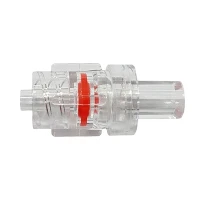


Check valves, also known as non-return valves or one-way valves, play a crucial role in the chemical industry. As a check valve supplier, I have witnessed firsthand the diverse and vital applications of these valves in various chemical processes. In this blog, I will explore the key applications of check valves in the chemical industry, highlighting their importance and benefits.
1. Preventing Backflow in Chemical Pipelines
One of the primary functions of check valves in the chemical industry is to prevent backflow in pipelines. Chemical processes often involve the transfer of fluids under pressure, and backflow can lead to serious problems such as contamination, equipment damage, and safety hazards. Check valves allow the fluid to flow in one direction only, automatically closing when the flow reverses.
For example, in a chemical plant where different chemicals are mixed and transferred through pipelines, a check valve can be installed at the inlet of each storage tank. This ensures that the chemicals do not flow back into the wrong tank, preventing cross - contamination. Similarly, in a pumping system, check valves are used to prevent the backflow of fluid when the pump stops, protecting the pump from damage and maintaining the integrity of the system.
2. Protecting Equipment from Reverse Flow
Chemical processing equipment such as pumps, compressors, and reactors are expensive and sensitive. Reverse flow can cause significant damage to these equipment. Check valves act as a safeguard by preventing the reverse flow of fluids.
In a pump system, a check valve is typically installed downstream of the pump. When the pump is operating, the valve opens to allow the fluid to flow in the desired direction. If the pump suddenly stops or there is a power failure, the check valve closes immediately, preventing the backflow of fluid that could otherwise damage the pump impeller or cause water hammer effects.
In a compressor system, check valves are used to prevent the backflow of compressed gas. This protects the compressor from damage and ensures that the compressed gas is delivered to the intended process without any loss or contamination.
3. Maintaining Pressure in Chemical Systems
Check valves are also used to maintain pressure in chemical systems. In some chemical processes, it is essential to maintain a certain pressure level to ensure the proper functioning of the equipment and the quality of the products.
For instance, in a chemical reactor, a check valve can be used to maintain the pressure inside the reactor. When the pressure inside the reactor exceeds the set level, the valve opens to release the excess pressure. When the pressure drops below the set level, the valve closes to prevent the backflow of outside air or other contaminants, thus maintaining the desired pressure inside the reactor.
4. Controlling Fluid Flow in Batch Processes
In batch chemical processes, check valves are used to control the flow of fluids at different stages of the process. Batch processes involve the sequential addition and removal of chemicals in a specific order. Check valves ensure that the fluids flow in the correct direction and at the right time.


For example, in a batch mixing process, check valves can be used to control the addition of different chemicals into the mixing tank. Each chemical is stored in a separate tank, and a check valve is installed at the outlet of each tank. When it is time to add a particular chemical to the mixing tank, the valve opens to allow the chemical to flow in. Once the required amount of the chemical has been added, the valve closes to prevent any further flow.
5. Applications in Corrosive Chemical Environments
The chemical industry often deals with highly corrosive chemicals such as acids, alkalis, and solvents. Check valves made from corrosion - resistant materials are essential in these environments.
Materials such as stainless steel, titanium, and various plastics are commonly used to manufacture check valves for corrosive chemical applications. For example, in a process where hydrochloric acid is being transferred, a check valve made from a corrosion - resistant plastic like polyvinyl chloride (PVC) or polypropylene (PP) can be used. These materials can withstand the corrosive effects of the acid and ensure the long - term reliability of the valve.
6. Use in Safety Systems
Check valves are an integral part of safety systems in the chemical industry. They are used in emergency relief systems, fire protection systems, and other safety - critical applications.
In an emergency relief system, a check valve is used to prevent the backflow of fluids from the relief line back into the process system. This ensures that the relief system operates effectively in case of an overpressure situation. In a fire protection system, check valves are used to prevent the backflow of water from the sprinkler system, ensuring that the water is available for firefighting when needed.
7. Dual Check Valve and Luer Check Valve Applications
Dual Check Valve and Luer Check Valve also find specific applications in the chemical industry. Dual check valves provide an extra level of protection against backflow. They consist of two check valves in series, which reduces the risk of backflow even further. In chemical processes where the consequences of backflow are severe, such as in high - purity chemical production, dual check valves are often used.
Luer check valves are commonly used in small - scale chemical applications, such as in laboratory equipment and small - batch chemical processing. Their compact size and easy installation make them suitable for these applications. They are often used to control the flow of small volumes of chemicals in a precise manner.
Conclusion
Check valves are indispensable components in the chemical industry. Their applications range from preventing backflow and protecting equipment to maintaining pressure and controlling fluid flow. With the diverse range of materials and designs available, check valves can be tailored to meet the specific requirements of different chemical processes, including those involving corrosive chemicals and high - pressure environments.
If you are in the chemical industry and are looking for reliable check valves for your applications, I invite you to contact me for more information. Our company offers a wide range of check valves, including dual check valves and Luer check valves, which are designed to meet the highest quality and performance standards. We can provide customized solutions based on your specific needs and requirements. Let's discuss your project and find the best check valve solutions for you.
References
- Green, Don W., and Robert H. Perry. Perry's Chemical Engineers' Handbook. McGraw - Hill Education, 2018.
- Coulson, J. M., and J. F. Richardson. Chemical Engineering. Butterworth - Heinemann, 2012.
- Sinnott, Robin K. Coulson & Richardson's Chemical Engineering: Volume 6 - Chemical Engineering Design. Elsevier, 2019.