


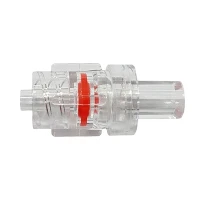


Hey there! As a stopcock supplier, I often get asked about what types of chemicals a stopcock can withstand. It's a super important question, especially for those in industries like medical, chemical research, and manufacturing. So, let's dive right in and explore this topic.
First off, what exactly is a stopcock? Well, it's a simple yet crucial valve used to control the flow of liquids or gases in a tube or pipe. It's like a traffic cop for fluids, deciding where they go and when. And depending on the application, stopcocks need to be able to handle different kinds of chemicals without getting damaged.
General Chemical Resistance
Most standard stopcocks are made from materials like glass, plastic, or metal. Each material has its own set of chemical resistance properties.
Glass Stopcocks
Glass is a popular choice because it's inert to many chemicals. It can withstand a wide range of acids, bases, and organic solvents. For example, it can handle hydrochloric acid (HCl), sulfuric acid (H₂SO₄), and sodium hydroxide (NaOH) solutions without any significant reaction. This makes glass stopcocks ideal for use in laboratories where precise chemical reactions are taking place.
However, glass isn't invincible. Hydrofluoric acid (HF) is a big no - no for glass stopcocks. HF reacts with the silica in glass, slowly eating away at it and compromising the integrity of the stopcock. So, if you're dealing with HF, you'll need to look for an alternative material.
Plastic Stopcocks
Plastic stopcocks come in various types, such as polypropylene (PP), polyethylene (PE), and polytetrafluoroethylene (PTFE).
PP and PE are relatively inexpensive and have good resistance to many non - polar solvents like hexane and toluene. They can also handle some weak acids and bases. But they're not as resistant to strong oxidizing agents or polar solvents like acetone.
On the other hand, PTFE, also known as Teflon, is a superstar when it comes to chemical resistance. It can withstand almost all chemicals, including strong acids, bases, and organic solvents. PTFE stopcocks are often used in high - end applications where extreme chemical resistance is required, like in the pharmaceutical industry.
Metal Stopcocks
Metal stopcocks, usually made of stainless steel or brass, are strong and durable. Stainless steel is resistant to many corrosive chemicals, especially those found in industrial settings. It can handle mild acids and alkalis, as well as some oxidizing agents.
Brass, however, is more susceptible to corrosion. It can react with certain acids and salts, so it's not suitable for use with highly corrosive chemicals.
Chemicals in Specific Industries
Let's take a look at how stopcocks are used in different industries and the chemicals they encounter.
Medical Industry
In the medical field, stopcocks are commonly used in intravenous (IV) lines to control the flow of fluids and medications. They need to be compatible with a variety of drugs and solutions.
For example, they often come into contact with saline solutions, which are basically a mixture of salt and water. Most stopcocks can handle saline without any issues. But when it comes to medications, things get a bit more complicated. Some drugs are acidic, while others are basic. And some may contain additives or preservatives that could potentially react with the stopcock material.
That's why medical - grade stopcocks are carefully tested to ensure they're compatible with a wide range of medications. 3 Way Stopcock are particularly useful in medical settings as they allow for multiple fluid sources to be connected and controlled.
Chemical Research
In a chemical research lab, stopcocks are used in all sorts of experiments. They might be used to control the flow of reactants in a chemical synthesis or to collect samples.
Here, the chemicals can be extremely diverse. You could be working with volatile organic compounds (VOCs) like benzene or chloroform, or highly reactive substances like lithium aluminum hydride (LiAlH₄). The choice of stopcock material is crucial to ensure that it doesn't contaminate the experiment or get damaged by the chemicals.
Manufacturing
In manufacturing, stopcocks are used in processes like chemical production, food and beverage processing, and water treatment.
In chemical production, they may be exposed to strong acids, bases, and solvents. For example, in the production of fertilizers, stopcocks need to be able to handle phosphoric acid and ammonia.
In food and beverage processing, stopcocks are used to control the flow of ingredients like sugar solutions, fruit juices, and flavorings. They need to be made from food - grade materials that are safe for contact with consumable products.
In water treatment, stopcocks are used to control the flow of chemicals like chlorine and fluoride, which are used to disinfect and purify water.
Factors Affecting Chemical Resistance
It's not just the type of chemical that matters; there are other factors that can affect a stopcock's ability to withstand chemicals.
Concentration
The concentration of the chemical plays a big role. A low - concentration solution of an acid may not cause any problems for a stopcock, but a high - concentration solution could be corrosive. For example, a 10% solution of acetic acid might be fine for a plastic stopcock, but a 90% solution could cause it to degrade.
Temperature
Temperature can also have an impact. Higher temperatures generally increase the reactivity of chemicals. So, a stopcock that can withstand a certain chemical at room temperature may not be able to handle it at an elevated temperature.
Exposure Time
The longer a stopcock is exposed to a chemical, the more likely it is to be affected. Even a relatively resistant material can start to show signs of wear and tear if it's in contact with a chemical for an extended period.
Choosing the Right Stopcock
When it comes to choosing the right stopcock for your application, there are a few things to consider.


First, think about the chemicals you'll be using. Make a list of all the chemicals and their concentrations, and then research the chemical resistance of different stopcock materials.
Second, consider the temperature and pressure conditions of your application. Some materials may not be suitable for high - temperature or high - pressure environments.
Finally, don't forget about the cost. While PTFE stopcocks offer excellent chemical resistance, they can be quite expensive. So, you'll need to find a balance between performance and cost.
If you're still not sure which stopcock is right for you, don't hesitate to reach out to us. We're here to help you make the best choice for your specific needs. Whether you're in the medical field, a research lab, or a manufacturing plant, we have a wide range of stopcocks to meet your requirements.
In conclusion, the ability of a stopcock to withstand chemicals depends on the material it's made of, the type and concentration of the chemicals, the temperature, and the exposure time. By understanding these factors and choosing the right stopcock, you can ensure the safe and efficient operation of your processes.
If you're interested in purchasing stopcocks or have any questions about our products, please feel free to contact us for a purchase negotiation. We're looking forward to working with you!
References
- "Handbook of Chemical Resistance" by Carl A. Harper
- "Materials Science for Engineers" by Donald Askeland and Pradeep Fulay
- Articles from industry journals such as "Chemical Engineering" and "Medical Device Technology"