





Stopcocks, those crucial components in various industries, especially in the medical field, come in a wide array of materials. As a stopcock supplier, I've had the privilege of delving deep into the world of these materials, understanding their properties, advantages, and limitations. In this blog, I'll explore the different materials used to make stopcocks, shedding light on what makes each one suitable for specific applications.
1. Plastic Materials
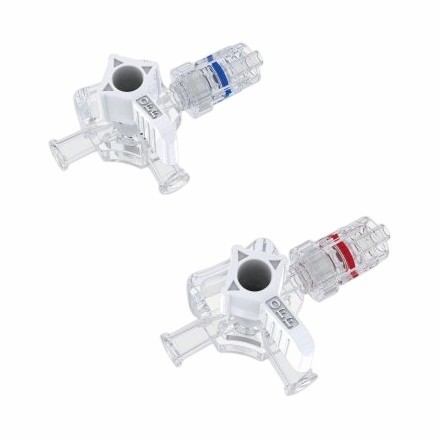
Plastic is one of the most commonly used materials for stopcocks, especially in the medical industry. There are several types of plastics employed, each with its own set of characteristics.
Polycarbonate
Polycarbonate is a strong, transparent plastic known for its high impact resistance. It can withstand significant mechanical stress without cracking or breaking, making it ideal for stopcocks that may be subjected to rough handling. Its transparency allows for easy visualization of the fluid flow inside the stopcock, which is crucial in medical applications where accurate monitoring is essential. Polycarbonate also has good chemical resistance, meaning it can tolerate exposure to a variety of medical fluids without degrading. However, it can be relatively expensive compared to some other plastics, and it may not be suitable for applications where it will be exposed to certain solvents or high temperatures for extended periods.
Polypropylene
Polypropylene is a lightweight, flexible plastic that is resistant to many chemicals and has a low moisture absorption rate. It is often used in disposable stopcocks due to its cost - effectiveness. Polypropylene stopcocks are easy to manufacture, which allows for high - volume production at a relatively low cost. They are also suitable for applications where flexibility is required, as they can bend slightly without losing their functionality. However, polypropylene has a lower impact resistance compared to polycarbonate, so it may not be the best choice for stopcocks that need to withstand heavy impacts.
Acrylonitrile Butadiene Styrene (ABS)
ABS is a tough, rigid plastic that combines the strength of acrylonitrile, the flexibility of butadiene, and the processability of styrene. It has good mechanical properties, including high impact resistance and dimensional stability. ABS stopcocks are often used in industrial applications where durability and reliability are important. They can be easily molded into complex shapes, which makes them suitable for stopcocks with intricate designs. ABS also has good chemical resistance to a wide range of substances, although it may not be as resistant to some strong solvents as polycarbonate.

2. Metal Materials
Metals are another important category of materials used for stopcocks, particularly in applications where high strength, durability, and resistance to high pressures are required.
Stainless Steel
Stainless steel is a popular choice for stopcocks in many industries, including the medical and chemical industries. It is highly resistant to corrosion, which makes it suitable for use with a wide range of fluids, including corrosive chemicals and body fluids in medical applications. Stainless steel stopcocks are also very strong and can withstand high pressures without deforming. They have a long service life and are relatively easy to clean and sterilize, which is crucial in medical settings. However, stainless steel is heavier and more expensive than most plastics, and it may not be suitable for applications where weight is a critical factor.
Brass
Brass is an alloy of copper and zinc, and it has been used for stopcocks for a long time. It has good corrosion resistance, especially in non - acidic environments. Brass stopcocks are relatively easy to machine, which allows for the production of precise and complex designs. They also have good thermal conductivity, which can be an advantage in some applications where heat transfer is important. However, brass may not be suitable for use with certain chemicals, as it can react with acids and some other substances. Additionally, brass stopcocks may require regular maintenance to prevent the formation of tarnish or corrosion.
3. Glass Materials
Glass stopcocks are still used in some specialized applications, particularly in laboratories.
Borosilicate Glass
Borosilicate glass is known for its high thermal resistance and low coefficient of thermal expansion. This means that it can withstand rapid temperature changes without cracking. Borosilicate glass stopcocks are often used in laboratory settings where they may be exposed to hot or cold chemicals. They are also highly resistant to chemical corrosion, making them suitable for use with a wide range of acids, bases, and organic solvents. The transparency of glass allows for easy visualization of the fluid flow, which is important in laboratory experiments. However, glass is brittle and can break easily if subjected to mechanical stress, so it requires careful handling.
4. Elastomeric Materials
Elastomers are used in stopcocks mainly for sealing purposes.
Silicone Rubber
Silicone rubber is a popular choice for gaskets and seals in stopcocks. It has excellent flexibility, high temperature resistance, and good chemical resistance. Silicone rubber seals can provide a tight and reliable seal, preventing fluid leakage. They are also biocompatible, which makes them suitable for use in medical applications. Silicone rubber can withstand repeated compression and expansion without losing its elasticity, ensuring a long - lasting seal. However, silicone rubber may absorb some organic solvents, which can affect its performance over time.
Choosing the Right Material for Your Stopcock
As a stopcock supplier, I understand that choosing the right material is crucial for the performance and longevity of the stopcock. When selecting a material, several factors need to be considered:
- Application: The intended use of the stopcock is the most important factor. In medical applications, materials that are biocompatible and easy to sterilize, such as polycarbonate or stainless steel, are preferred. In industrial applications, materials that can withstand high pressures and harsh chemicals, like stainless steel or ABS, may be more suitable.
- Fluid Compatibility: The type of fluid that will flow through the stopcock must be considered. Some fluids may react with certain materials, causing degradation or contamination. For example, strong acids may corrode brass, so a more chemically resistant material like stainless steel or glass may be needed.
- Mechanical Requirements: The stopcock may need to withstand certain mechanical stresses, such as impacts or high pressures. Materials with high strength and impact resistance, like stainless steel or polycarbonate, are better suited for applications where mechanical stress is a concern.
- Cost: Cost is always a factor in any purchasing decision. Plastic materials are generally more cost - effective than metals and glass, making them a popular choice for disposable or low - cost applications.
If you are in the market for high - quality stopcocks, we offer a wide range of options made from different materials to meet your specific needs. Whether you need a 3 Way Stopcock for a medical procedure or a stopcock for an industrial application, we have the expertise and the products to provide you with the best solution.
We understand that every customer has unique requirements, and we are committed to working closely with you to ensure that you get the right stopcock for your application. Our team of experts can provide you with detailed information about the materials, performance, and compatibility of our stopcocks.
If you are interested in learning more about our stopcock products or would like to discuss your specific needs, please feel free to reach out to us. We look forward to the opportunity to work with you and provide you with the best stopcock solutions.
References
- "Handbook of Plastics, Elastomers, and Composites" by Charles A. Harper
- "Metals Handbook" by ASM International
- "Glass Science and Technology" by D. R. Uhlmann and N. J. Kreidl