


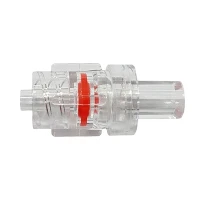


A precision flow regulator is a crucial device in various industries, especially in medical and industrial applications. As a supplier of precision flow regulators, I am well - versed in its functions and significance. In this blog, I will delve into the details of what a precision flow regulator does and why it is indispensable in many scenarios.
1. Basic Definition and Working Principle
A precision flow regulator is a mechanical or electronic device designed to control the flow rate of a fluid (liquid or gas) with high accuracy. The basic working principle involves adjusting the cross - sectional area of the flow path or using a feedback control system to maintain a constant flow rate.
In mechanical precision flow regulators, a valve mechanism is often used. For example, a needle valve can be adjusted to change the opening size, thereby controlling the amount of fluid passing through. The valve is usually calibrated to provide a specific flow rate within a certain range. When the pressure upstream of the regulator changes, the mechanical structure of the regulator will automatically adjust to keep the flow rate stable.
Electronic precision flow regulators, on the other hand, use sensors to measure the flow rate and a control unit to adjust the flow. These sensors can detect parameters such as pressure, temperature, and flow velocity. The control unit then compares the measured value with the setpoint and makes real - time adjustments to ensure that the flow rate remains at the desired level.
2. Functions in Medical Applications
2.1 Intravenous (IV) Therapy
In the medical field, one of the most common uses of precision flow regulators is in intravenous therapy. When a patient needs to receive a specific amount of medication or fluid over a period of time, a precision flow regulator is used to ensure accurate dosing.
For example, in the treatment of patients with heart failure, it is crucial to control the rate of fluid infusion precisely. Too fast an infusion can put excessive strain on the heart, while too slow an infusion may not provide the necessary therapeutic effect. A precision flow regulator allows medical staff to set the exact flow rate, typically measured in milliliters per hour, and maintains this rate throughout the infusion process.
2.2 Anesthesia Delivery
Precision flow regulators are also essential in anesthesia delivery systems. Anesthesiologists need to administer a precise amount of anesthetic gases and vapors to patients during surgery. The flow regulator ensures that the concentration and flow rate of the anesthetic agents are maintained at the appropriate levels. This is critical for patient safety and the success of the surgical procedure.
In addition, in the delivery of oxygen and other respiratory gases in intensive care units, precision flow regulators play a vital role in providing patients with the correct amount of gas to support their breathing.


3. Functions in Industrial Applications
3.1 Chemical Processing
In chemical processing plants, precision flow regulators are used to control the flow of various chemicals. For instance, in a reaction vessel where multiple chemicals are mixed in specific proportions, the flow regulator ensures that each chemical is added at the correct rate. This is essential for the quality and consistency of the final product.
If the flow rate of a reactant is not accurately controlled, it can lead to incomplete reactions, the formation of unwanted by - products, or even safety hazards. By using precision flow regulators, chemical manufacturers can improve the efficiency and reliability of their production processes.
3.2 Semiconductor Manufacturing
The semiconductor industry requires extremely precise control of gas and liquid flows during the manufacturing process. For example, in the process of chemical vapor deposition (CVD), where thin films are deposited on semiconductor wafers, a precision flow regulator is used to control the flow of precursor gases.
The slightest variation in the flow rate can affect the thickness, uniformity, and quality of the deposited film, which in turn can impact the performance of the semiconductor device. Therefore, precision flow regulators are crucial for maintaining the high - quality standards required in semiconductor manufacturing.
4. Compatibility with Other Components
Precision flow regulators often need to work in conjunction with other components in a system. For example, in a medical infusion system, it may be connected to Connectors to ensure a leak - free connection between different parts of the system.
The Combi Stopper can be used in combination with the precision flow regulator to control the access to the fluid source. And the Infusion Spike is used to pierce the fluid container and initiate the flow, which then passes through the precision flow regulator for accurate control.
5. Advantages of Our Precision Flow Regulators
As a supplier of precision flow regulators, we offer several advantages. Firstly, our regulators are designed with high - quality materials to ensure long - term reliability and durability. They are resistant to corrosion, wear, and chemical damage, which is especially important in harsh industrial and medical environments.
Secondly, our products have high precision and accuracy. Through advanced manufacturing processes and strict quality control, we can ensure that the flow rate error is within a very small range, meeting the strict requirements of various applications.
Thirdly, our precision flow regulators are easy to install and operate. They come with clear instructions and user - friendly interfaces, allowing users to quickly set up and adjust the flow rate according to their needs.
6. Contact for Purchase and Negotiation
If you are interested in our precision flow regulators or have any questions about their functions and applications, we welcome you to contact us for purchase and negotiation. Our professional sales team will be happy to provide you with detailed product information, technical support, and competitive pricing. Whether you are in the medical field, industrial manufacturing, or other industries that require precise flow control, we can offer you the most suitable solutions.
References
- "Handbook of Fluid Flow Measurement" by Richard W. Miller.
- "Medical Device Technology: Principles and Design" by Joseph D. Bronzino.
- "Industrial Process Control: Fundamentals and Applications" by William L. Luyben.