


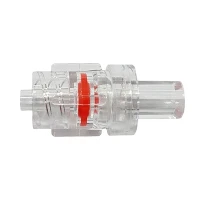


What is the flexibility of rotating luer connectors?
In the dynamic landscape of medical device technology, rotating luer connectors have emerged as a cornerstone component, offering unparalleled flexibility and functionality. As a leading supplier of Rotating Luer Connectors, I've witnessed firsthand the transformative impact these connectors have on various medical applications. In this blog, we'll delve into the concept of flexibility in rotating luer connectors, exploring their design, advantages, and real - world applications.
Understanding Rotating Luer Connectors
Before we discuss flexibility, it's essential to understand what rotating luer connectors are. A luer connector is a standardized system for making leak - tight connections between medical devices, such as syringes, catheters, and IV tubing. Rotating luer connectors, as the name suggests, have an additional feature that allows for rotational movement. This rotation feature is typically achieved through a well - engineered design that separates the locking mechanism from the fluid pathway, enabling the connector to turn smoothly without affecting the integrity of the connection.
The basic components of a rotating luer connector include a male and a female part. The Male Luer Lock Connector has a tapered tip that fits into the corresponding Female Luer Lock Connector. The locking mechanism, often a threaded collar on the female part that screws onto the male part, ensures a secure and leak - proof connection. The rotating element is usually incorporated between the locking collar and the fluid - carrying portion of the connector.
Flexibility in Design
One of the primary aspects of the flexibility of rotating luer connectors lies in their design. These connectors are available in a wide range of configurations to meet the diverse needs of different medical applications. For instance, they can be designed with different thread types, such as luer lock or luer slip. Luer lock connectors provide a more secure connection, as the threads prevent accidental disconnection, while luer slip connectors offer a quick and easy connection method, suitable for applications where speed is of the essence.
The materials used in the construction of rotating luer connectors also contribute to their flexibility. They can be made from various polymers, such as polycarbonate, polypropylene, and ABS. Each material has its own set of properties, including chemical resistance, transparency, and mechanical strength. For example, polycarbonate is known for its high impact resistance and clarity, making it suitable for applications where visual inspection of the fluid flow is required. On the other hand, polypropylene is lightweight and has good chemical resistance, making it a popular choice for disposable medical devices.
Another design - related aspect of flexibility is the ability to customize rotating luer connectors. As a supplier, we often work with medical device manufacturers to develop custom - designed connectors that meet their specific requirements. This could involve modifying the size, shape, or surface finish of the connector, or incorporating additional features such as valves or filters.
Flexibility in Application
Rotating luer connectors offer significant flexibility in terms of their applications. They are widely used in the fields of intravenous therapy, anesthesia, and catheterization.
In intravenous therapy, rotating luer connectors are used to connect IV bags, syringes, and catheters. The ability to rotate the connector allows healthcare providers to adjust the position of the tubing without disconnecting the device, reducing the risk of contamination and ensuring a continuous flow of fluids. For example, when administering multiple medications through a single IV line, the rotating connector enables easy re - orientation of the syringes, making the process more efficient.
In anesthesia, these connectors are used to connect anesthesia machines, breathing circuits, and airway devices. The flexibility of rotation is crucial in this context, as it allows for easy positioning of the equipment to ensure proper ventilation and patient comfort. For instance, during a surgical procedure, the anesthesiologist may need to adjust the position of the breathing circuit without interrupting the flow of anesthetic gases.
In catheterization procedures, rotating luer connectors are used to connect catheters to other devices, such as drainage bags or infusion pumps. The rotation feature enables the catheter to be manipulated easily, reducing the risk of kinking and ensuring smooth insertion and removal. This is particularly important in minimally invasive procedures, where precise control of the catheter is essential.
Flexibility in Compatibility
Rotating luer connectors are designed to be compatible with a wide range of medical devices. They adhere to international standards, such as ISO 594, which ensures that they can be used interchangeably with other luer - compatible components. This compatibility is a key aspect of their flexibility, as it allows medical device manufacturers to integrate rotating luer connectors into their existing product lines without the need for significant modifications.
For example, a syringe manufacturer can use our Rotating Luer Connectors in their syringes, knowing that they will be compatible with other luer - based devices, such as IV sets and catheters. This not only simplifies the manufacturing process but also provides end - users with the flexibility to use different combinations of medical devices without compatibility issues.
Advantages of Flexibility
The flexibility of rotating luer connectors offers several advantages. Firstly, it improves the efficiency of medical procedures. By allowing for easy adjustment of the position of medical devices, healthcare providers can perform tasks more quickly and accurately, reducing the time required for patient care.
Secondly, it enhances patient safety. The ability to rotate the connector without disconnecting the device reduces the risk of contamination and accidental disconnection, which can lead to serious complications. For example, in an IV therapy setting, a secure and leak - proof connection is essential to prevent the introduction of bacteria into the bloodstream.
Thirdly, the flexibility of rotating luer connectors contributes to cost - effectiveness. The compatibility with a wide range of devices means that medical device manufacturers can reduce the number of different components they need to produce, leading to economies of scale. Additionally, the ability to customize connectors allows for the development of more efficient and specialized medical devices, which can ultimately reduce the overall cost of healthcare.
Conclusion
In conclusion, the flexibility of rotating luer connectors is a multi - faceted concept that encompasses design, application, and compatibility. These connectors play a vital role in modern medical device technology, offering solutions that meet the diverse needs of the healthcare industry. As a supplier of Rotating Luer Connectors, we are committed to providing high - quality products that offer maximum flexibility and performance.
If you are a medical device manufacturer or a healthcare provider interested in learning more about our rotating luer connectors or discussing potential procurement opportunities, we encourage you to reach out. Our team of experts is ready to assist you in finding the right connector solutions for your specific requirements.


References
- ISO 594 - 1:1986, Conical fittings with a 6% (Luer) taper for syringes, needles and certain other medical equipment - Part 1: General requirements.
- "Medical Device Technology Handbook", edited by David M. Goldberg, CRC Press, 2017.
- "Handbook of Medical Device Manufacturing", edited by James G. Webster, John Wiley & Sons, 2014.