


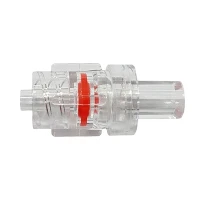


Ensuring the proper alignment of a female luer lock connector is crucial in various medical and fluid - handling applications. As a supplier of female luer lock connectors, I understand the significance of this process and am here to share some key insights on how to achieve accurate alignment.
Understanding the Female Luer Lock Connector
Before delving into alignment techniques, it's essential to have a clear understanding of the female luer lock connector itself. A female luer lock connector is designed to mate with a Male Luer Lock Connector in a secure and leak - free manner. It typically consists of a tapered inner surface and a threaded outer collar. The taper is standardized according to international standards, such as ISO 594, which ensures compatibility between different luer connectors.
The threaded collar on the female luer lock connector is used to lock the connection with the male luer lock connector. When properly aligned and tightened, this threaded interface provides a reliable seal that prevents fluid leakage.
Importance of Proper Alignment
Proper alignment of the female luer lock connector is of utmost importance for several reasons. Firstly, misalignment can lead to incomplete sealing, resulting in fluid leakage. In medical applications, fluid leakage can pose serious risks to patients, such as contamination of the surrounding environment or inaccurate delivery of medications.
Secondly, misaligned connectors may be more difficult to connect and disconnect. This can cause frustration for healthcare professionals and may even lead to damage to the connectors over time. Additionally, improper alignment can put excessive stress on the connectors, potentially leading to premature failure.
Pre - connection Inspection
Before attempting to connect a female luer lock connector, a thorough pre - connection inspection is necessary. Start by visually examining the connector for any signs of damage, such as cracks, chips, or deformities. A damaged connector is unlikely to align properly and may not provide a secure seal.
Check the internal taper of the female luer lock connector for any debris or foreign objects. Even small particles can interfere with the alignment and sealing process. Use a clean, lint - free cloth to wipe the inside of the connector if necessary.
Inspect the threaded collar of the female luer lock connector. Ensure that the threads are clean and undamaged. Damaged threads can prevent proper locking and alignment with the male luer lock connector.
Alignment Techniques
Visual Alignment
Visual alignment is the first step in connecting a female luer lock connector. Hold the female luer lock connector and the male luer lock connector in a way that allows you to clearly see the alignment of the tapered ends. The tapered ends of the two connectors should be aligned coaxially. This means that the centerlines of the two tapers should be in a straight line.
Take your time to position the connectors accurately before attempting to engage the threads. A slight misalignment at this stage can cause significant problems later on.
Rotational Alignment
Once the tapered ends are visually aligned, it's time to focus on rotational alignment. The threaded collar on the female luer lock connector needs to be aligned with the corresponding threads on the male luer lock connector.
Start by gently threading the female luer lock connector onto the male luer lock connector by hand. Do not use excessive force at this stage. As you start to turn the female luer lock connector, it should engage smoothly with the male luer lock connector. If you feel any resistance or if the connector does not turn easily, stop immediately and re - check the alignment.
Use of Alignment Aids
In some cases, alignment aids can be used to ensure more accurate alignment. For example, some Rotating Luer Connectors are designed with features that make alignment easier. These connectors may have markings or guides that help the user align the connectors correctly.
Another option is to use a luer connector alignment tool. These tools are specifically designed to hold the connectors in the correct position during the connection process. They can be particularly useful in high - volume or critical applications where precise alignment is essential.


Tightening Process
Once the female luer lock connector is properly aligned with the male luer lock connector, it's time to tighten the connection. Use a firm but gentle hand to turn the threaded collar of the female luer lock connector clockwise. Do not over - tighten the connector, as this can cause damage to the threads or the connectors themselves.
The ideal tightness is achieved when the connection is secure and there is no visible gap between the two connectors. You should feel a slight resistance as you tighten the connector, but it should still turn smoothly.
Post - connection Verification
After connecting the female luer lock connector, it's important to perform a post - connection verification. Check for any signs of fluid leakage around the connection. You can do this by applying a small amount of pressure to the fluid system and observing the area around the connector.
Gently tug on the connected connectors to ensure that they are firmly attached. If the connectors move or separate easily, there may be a problem with the alignment or tightening.
Training and Education
Proper alignment of female luer lock connectors requires training and education. As a supplier, we offer training programs for our customers to ensure that they understand the correct alignment and connection procedures. These training programs cover topics such as pre - connection inspection, alignment techniques, and post - connection verification.
We also provide detailed product documentation that includes step - by - step instructions on how to align and connect our female luer lock connectors. Our goal is to empower our customers with the knowledge and skills they need to use our products safely and effectively.
Quality Control in Manufacturing
At our company, we implement strict quality control measures during the manufacturing process of female luer lock connectors. We use high - precision machining and molding techniques to ensure that the dimensions of our connectors meet the international standards.
Each connector undergoes a series of tests, including dimensional inspection, pressure testing, and leak testing. Only connectors that pass these rigorous tests are released for sale. By maintaining high - quality manufacturing standards, we ensure that our customers receive connectors that are easy to align and provide reliable performance.
Conclusion
Ensuring the proper alignment of a female luer lock connector is a critical process that requires attention to detail and proper techniques. By following the steps outlined in this blog, including pre - connection inspection, proper alignment techniques, correct tightening, and post - connection verification, you can minimize the risk of fluid leakage and ensure the reliable performance of your connectors.
If you are in the market for high - quality Female Luer Lock Connector, we invite you to reach out to us. Our team of experts is ready to assist you with your procurement needs and provide you with the best solutions for your applications. Whether you are a medical device manufacturer, a healthcare provider, or involved in other fluid - handling industries, we can offer you connectors that meet your requirements. Contact us today to start a productive conversation about your procurement needs.
References
- ISO 594 - 1:1986, Conical fittings with a 6 % (Luer) taper for syringes, needles and certain other medical equipment — Part 1: General requirements.
- Medical Device Regulation (MDR) guidelines related to luer connectors.
- Industry best practices for luer connector alignment and connection.