




Can a Luer Check Valve be used in a two - phase flow system?
As a supplier of Luer Check Valves, I often encounter inquiries from customers about the applicability of our products in various systems, especially in two - phase flow systems. This blog aims to delve into the question of whether a Luer Check Valve can be used in such systems, providing a comprehensive analysis based on scientific principles and practical considerations.
Understanding Two - Phase Flow Systems
Two - phase flow systems involve the simultaneous flow of two different phases, typically a liquid and a gas. These systems are prevalent in many industrial and medical applications. In the medical field, for example, they can be found in respiratory equipment where air and liquid medications may flow together. In industrial settings, two - phase flow is common in heat exchangers, pipelines for transporting oil and gas mixtures, and chemical processing plants.


The behavior of two - phase flow is significantly more complex than single - phase flow. The interaction between the two phases can lead to phenomena such as slug flow, where large slugs of liquid alternate with gas pockets, annular flow, where the liquid forms a film around the gas core, and bubble flow, where small gas bubbles are dispersed in the liquid. These flow patterns can have a profound impact on the performance of any components within the system, including check valves.
Characteristics of Luer Check Valves
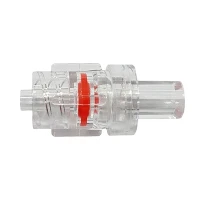
Luer Check Valves, accessible at Luer Check Valve, are designed to allow fluid to flow in one direction while preventing backflow. They are typically used in medical applications such as syringe connections, tubing systems, and intravenous (IV) lines. These valves are made of high - quality materials that are biocompatible and resistant to corrosion, ensuring their reliability and safety in medical environments.
The design of a Luer Check Valve is relatively simple, consisting of a valve body, a sealing element, and a spring or other mechanism to provide the necessary closing force. When the pressure on the inlet side of the valve exceeds the pressure on the outlet side by a certain amount (the cracking pressure), the valve opens, allowing fluid to pass through. When the inlet pressure drops below the outlet pressure, the valve closes, preventing backflow.
Challenges in Using Luer Check Valves in Two - Phase Flow Systems
One of the main challenges in using Luer Check Valves in two - phase flow systems is the unpredictable nature of the flow patterns. The presence of gas bubbles or slugs can cause rapid changes in pressure and flow rate, which may affect the proper functioning of the check valve. For example, in slug flow, the sudden arrival of a large slug of liquid can create a high - pressure spike that may cause the valve to open prematurely or close more slowly than expected.
Another challenge is the potential for gas entrapment within the valve. If gas becomes trapped in the valve, it can reduce the effective cross - sectional area for fluid flow, leading to increased pressure drop and reduced flow rate. In some cases, gas entrapment can also cause the valve to malfunction, resulting in leakage or incomplete closing.
The material compatibility with the two - phase fluid mixture is also a concern. Different phases may have different chemical properties, and the valve materials need to be resistant to corrosion and chemical attack from both the liquid and the gas components. Failure to ensure proper material compatibility can lead to degradation of the valve over time, reducing its performance and lifespan.
Possible Solutions and Considerations
Despite the challenges, there are several approaches that can be considered when using Luer Check Valves in two - phase flow systems.
Firstly, the cracking pressure of the check valve should be carefully selected. A valve with a lower cracking pressure may be more suitable for systems with low - pressure two - phase flow, as it can open more easily in response to small pressure differentials. However, a valve with too low a cracking pressure may be more prone to leakage during normal operation. On the other hand, a valve with a higher cracking pressure may be better able to withstand pressure fluctuations in the system, but it may require a higher inlet pressure to open, which could be a limitation in some applications.
Secondly, the design of the valve can be optimized to reduce the risk of gas entrapment. This can be achieved by using a valve with a smooth internal surface and a streamlined flow path. Additionally, some Luer Check Valves are designed with special features such as anti - siphon mechanisms or self - venting capabilities, which can help to prevent gas from accumulating within the valve.
It is also important to consider the orientation of the valve in the system. In some cases, installing the valve vertically rather than horizontally can help to minimize the effects of gas entrapment, as the gas bubbles are more likely to rise and escape from the valve.
Furthermore, regular maintenance and inspection of the check valve are essential to ensure its proper functioning in a two - phase flow system. This includes checking for any signs of wear, corrosion, or leakage, and replacing the valve if necessary.
Case Studies and Real - World Applications
There are some real - world applications where Luer Check Valves have been successfully used in two - phase flow systems. In certain types of medical nebulizers, for example, Luer Check Valves are used to control the flow of air and liquid medication. These valves need to be able to open and close rapidly in response to the changing pressure conditions during the nebulization process, while also preventing backflow of the medication.
In some industrial filtration systems, Luer Check Valves are used in two - phase flow applications to ensure the proper flow of a liquid - gas mixture through the filter. The valve helps to maintain the correct pressure and flow rate, preventing any reverse flow that could damage the filter or reduce its efficiency.
Conclusion and Call to Action
In conclusion, while using a Luer Check Valve in a two - phase flow system presents some challenges, it is possible with careful consideration of the valve design, operating conditions, and maintenance requirements. Our company, as a leading supplier of Luer Check Valves, has extensive experience and expertise in providing solutions for various applications, including two - phase flow systems.
If you are interested in learning more about our Luer Check Valves or exploring the possibility of using them in your two - phase flow system, we encourage you to contact us for a detailed discussion. We can provide you with technical information, product samples, and customized solutions based on your specific needs. You may also want to explore our Dual Check Valve options, which could offer additional benefits in certain applications.
Let's work together to find the best valve solutions for your two - phase flow system.
References
- Shoham, O. (2006). Multiphase Flow in Wellbores. Gulf Professional Publishing.
- Hewitt, G. F., & Hall - Taylor, N. S. (1970). Annular Two - Phase Flow. Pergamon Press.
- Staub, F. W. (1994). Two - Phase Flow and Heat Transfer in the Power and Process Industries. Springer.