


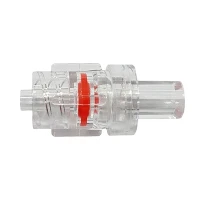


As a supplier of Burette Sets, I've often encountered various inquiries regarding the versatility and application scope of our products. One question that has come up more frequently is whether a burette set can be used for measuring the volume of emulsions. In this blog post, I'll delve into this topic, exploring the scientific aspects, practical considerations, and potential limitations.
Understanding Emulsions
Before we discuss the use of burette sets for measuring emulsions, it's essential to understand what emulsions are. Emulsions are a type of colloid in which two immiscible liquids are mixed together, with one liquid being dispersed as small droplets throughout the other. Common examples include oil - in - water (O/W) emulsions, such as milk, and water - in - oil (W/O) emulsions, like butter.
Emulsions are often stabilized by emulsifying agents, which prevent the droplets from coalescing and separating. The physical properties of emulsions, such as viscosity, surface tension, and droplet size distribution, can vary significantly depending on the composition and the method of preparation.


How Burette Sets Work
A Burette Set is a precision instrument commonly used in laboratories and medical settings for accurate volume measurement and controlled delivery of liquids. It consists of a graduated tube with a stopcock at the bottom, allowing for the regulation of the flow rate. The burette is filled with the liquid to be measured, and the volume is determined by reading the level of the liquid meniscus against the graduated scale.
The accuracy of a burette set depends on several factors, including the quality of the graduations, the precision of the stopcock, and the operator's skill in reading the meniscus. Burette sets are typically calibrated to provide accurate volume measurements within a certain range, usually with an error margin of a few percent.
Using Burette Sets for Measuring Emulsions
Advantages
- Accuracy: Burette sets are designed for precise volume measurement. If the emulsion has relatively stable properties and does not cause significant clogging or adhesion to the burette walls, it can provide accurate volume readings. This is particularly useful in research and quality control applications where precise measurements are crucial.
- Controlled Delivery: The stopcock on a burette set allows for controlled and gradual delivery of the emulsion. This can be beneficial in applications where the rate of addition of the emulsion needs to be carefully regulated, such as in titration experiments or in the preparation of formulations.
Challenges
- Viscosity and Flow: Emulsions can have high viscosities, especially those with a high concentration of the dispersed phase or those stabilized with thickening agents. High - viscosity emulsions may flow slowly through the burette, making it difficult to achieve a consistent flow rate. This can lead to inaccurate volume measurements and longer measurement times.
- Droplet Coalescence and Separation: During the measurement process, the shear forces exerted on the emulsion as it flows through the burette may cause the droplets to coalesce or separate. This can change the properties of the emulsion and affect the accuracy of the volume measurement. Additionally, if the emulsion separates into its two phases within the burette, it becomes challenging to measure the volume of the original emulsion accurately.
- Adhesion to Burette Walls: Emulsions may adhere to the inner walls of the burette, leaving a film or droplets behind. This can result in a loss of volume and inaccurate readings. The adhesion can be more pronounced if the emulsion contains surfactants or other substances that interact with the burette material.
Practical Considerations
- Selection of Burette Material: The choice of burette material can affect the performance when measuring emulsions. Glass burettes are commonly used due to their chemical resistance and transparency, which allows for easy meniscus reading. However, some emulsions may adhere more readily to glass surfaces. Plastic burettes may be an alternative, as they can be less prone to adhesion in some cases, but they may have lower chemical resistance and may not be suitable for all types of emulsions.
- Pre - treatment of the Burette: To reduce adhesion, the burette can be pre - treated with a suitable coating or surfactant. This can help to minimize the interaction between the emulsion and the burette walls. However, care must be taken to ensure that the pre - treatment does not contaminate the emulsion or affect its properties.
- Measurement Technique: When using a burette set to measure emulsions, it is important to follow proper measurement techniques. This includes allowing sufficient time for the emulsion to settle and for the meniscus to stabilize before taking a reading. The flow rate should be adjusted carefully to avoid excessive shear forces that could cause droplet coalescence or separation.
Comparison with Other Measuring Methods
- Graduated Cylinders: Graduated cylinders are simpler and less expensive than burette sets. They are suitable for approximate volume measurements of liquids, including emulsions. However, they are generally less accurate than burette sets, especially for small volumes.
- Pipettes: Pipettes are another common tool for volume measurement. They are available in various types, including volumetric pipettes and micropipettes. Pipettes can provide accurate volume measurements, but they are typically used for smaller volumes and may not be suitable for measuring large quantities of emulsions.
- Retractable Safety Syringe and Polycarbonate Syringe: Syringes are often used for measuring and delivering liquids in medical and laboratory settings. They can be useful for measuring emulsions, especially when the volume is relatively small and the flow rate needs to be controlled. However, syringes may have limitations in terms of accuracy and the maximum volume that can be measured compared to burette sets.
Conclusion
In conclusion, a burette set can be used for measuring the volume of emulsions, but it comes with certain challenges and limitations. The suitability of a burette set depends on the properties of the emulsion, such as viscosity, stability, and adhesion characteristics. In some cases, with proper selection of the burette material, pre - treatment, and measurement technique, accurate volume measurements can be obtained.
However, for emulsions with high viscosities, unstable properties, or a tendency to adhere to surfaces, alternative measuring methods may be more appropriate. It is important to carefully consider the specific requirements of the application and choose the most suitable measuring instrument accordingly.
If you are interested in our Burette Set or have any questions regarding its use for measuring emulsions, please feel free to contact us for further discussion and potential procurement. Our team of experts is ready to assist you in finding the best solution for your needs.
References
- Atkins, P., & de Paula, J. (2006). Physical Chemistry. Oxford University Press.
- Skoog, D. A., West, D. M., & Holler, F. J. (2004). Fundamentals of Analytical Chemistry. Thomson Brooks/Cole.
- McClements, D. J. (2005). Food Emulsions: Principles, Practice, and Techniques. CRC Press.