


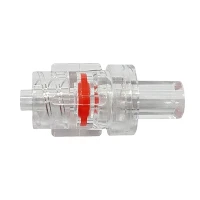
As a supplier of umbilical cord clamps, one of the most frequently asked questions I receive is about their compatibility with other birthing equipment. This is an important consideration for healthcare providers, who rely on the seamless integration of various tools and devices during the childbirth process to ensure the safety and well - being of both the mother and the newborn.
Umbilical cord clamps play a crucial role in the immediate postpartum period. They are used to securely and quickly clamp the umbilical cord, preventing excessive blood loss and facilitating a clean and efficient separation of the newborn from the placenta. In modern obstetric practice, cord clamps are often used in conjunction with a wide range of other birthing equipment, such as fetal monitors, birthing beds, and resuscitation devices.
Let's first look at the physical compatibility of umbilical cord clamps with other essential birthing tools. For example, when using a birthing mattress or a specialized birthing chair, the design of the umbilical cord clamp should not interfere with the positioning or operation of these pieces of equipment. Most modern umbilical cord clamps are designed to be compact and easy to handle, which allows healthcare providers to use them effectively regardless of the type of birthing surface or position. They are usually small enough to be easily maneuvered in the confined space around the birth area, whether the mother is lying on a traditional hospital bed or using a more unconventional birthing setup.
Our Umbilical Cord Clamps are engineered with a focus on ergonomics. The shape and size are carefully crafted to fit comfortably in the hand of the healthcare provider, enabling precise placement even in challenging situations. This ergonomic design also ensures that the clamp can be easily used in combination with other handheld devices, such as forceps or vacuum extraction cups, which might be necessary during a difficult delivery.
In addition to physical compatibility, there is also the aspect of safety compatibility. Umbilical cord clamps need to be made of materials that are non - toxic and safe for both the mother and the baby. They should not release any harmful substances or cause allergic reactions. Moreover, when used in conjunction with other medical equipment, there should be no risk of cross - contamination or interference with the normal functioning of these devices. For instance, if a cord clamp comes into contact with an electronic fetal monitor during the clamping process, it should not disrupt the monitor's ability to accurately measure the fetal heart rate.
Our umbilical cord clamps are made from high - quality, medical - grade materials that meet all the relevant safety standards. They are rigorously tested to ensure that they do not interfere with other birthing equipment's electrical or mechanical functions. This means that healthcare providers can use them with confidence, knowing that they are not only an effective tool for clamping the umbilical cord but also a safe addition to the birthing environment.
Another important consideration is the compatibility in terms of workflow. During childbirth, time is of the essence, and healthcare providers need to be able to use the equipment quickly and efficiently. Umbilical cord clamps should fit smoothly into the established birthing protocols. For example, in many hospitals, there is a specific sequence of steps for delivering the baby, clamping the cord, and performing initial newborn care. The umbilical cord clamp should be easy to access and use at the appropriate time in this sequence.
Our products are designed with workflow in mind. They are packaged in a way that allows for quick and easy retrieval, and the clamping mechanism is simple and intuitive to operate. This ensures that healthcare providers can integrate our umbilical cord clamps seamlessly into their existing birthing procedures, reducing the risk of delays or complications.
When it comes to compatibility with resuscitation equipment, the role of umbilical cord clamps becomes even more critical. In some cases, a newborn may require immediate resuscitation after birth. The umbilical cord clamp needs to be used in a way that does not hinder the quick access to the cord for potential umbilical vein catheterization, which may be necessary for administering medications or fluids.
Our umbilical cord clamps are designed to provide a secure hold on the cord while still allowing for easy access to the cord lumen if needed. The design takes into account the potential need for subsequent medical procedures, ensuring that the clamping process does not interfere with the overall resuscitation efforts.
In the context of infection control, umbilical cord clamps need to be compatible with the cleaning and sterilization methods used for other birthing equipment. In a hospital setting, maintaining a sterile environment is of utmost importance to prevent the spread of infections to the mother and the baby. Our cord clamps can be easily cleaned and sterilized using standard hospital - grade methods, such as autoclaving. This compatibility with infection control practices ensures that they can be used safely in conjunction with other equipment that undergoes similar sterilization procedures.
In conclusion, the compatibility of umbilical cord clamps with other birthing equipment is a multi - faceted issue that encompasses physical design, safety, workflow, and infection control. As a supplier, we are committed to providing high - quality umbilical cord clamps that meet all these compatibility requirements. Our Umbilical Cord Clamps are the result of extensive research and development, and they are designed to work seamlessly with a wide range of birthing tools and devices.
If you are a healthcare provider, a hospital administrator, or involved in the procurement of medical supplies, and you are interested in learning more about our umbilical cord clamps and their compatibility with your existing birthing equipment, we encourage you to reach out to us for a detailed discussion. We are more than happy to provide you with samples, technical specifications, and any other information you may need to make an informed decision. Let's work together to ensure the best possible outcomes for mothers and newborns during the childbirth process.


References
- American College of Obstetricians and Gynecologists. (20XX). Guidelines for Obstetric Care.
- International Federation of Gynecology and Obstetrics. (20XX). Best Practices in Childbirth.